
How to Beat Information Overload with a Knowledge Retrieval System
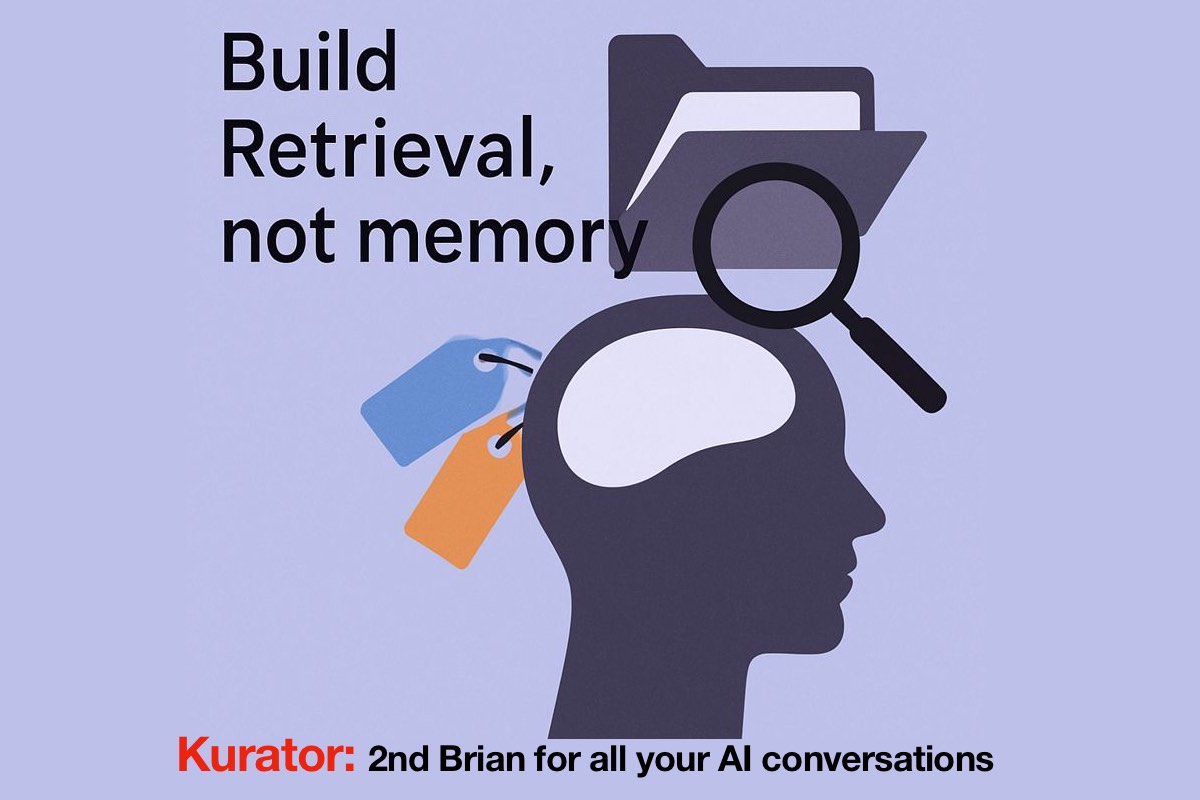
Information overload is not caused by too much content.
It’s caused by poor retrieval.
Every day, professionals consume articles, reports, videos, podcasts, and AI-generated conversations. The assumption is simple: I’ll remember this later. But later arrives, and the insight is gone—buried in bookmarks, chat histories, notes, or forgotten tabs.
This is not a discipline problem.
It’s a systems problem.
This pillar guide explains why memory fails at scale, why traditional tools don’t solve the issue, and how building a knowledge retrieval system—not a bigger brain—is the only sustainable way forward.
Why memory fails in the age of information abundance
Human memory evolved for survival, not storage.
It excels at:
- Pattern recognition
- Contextual judgment
- Creative synthesis
It fails at:
- Precise recall
- Long-term storage
- Managing fragmented information
When information is scattered across browser bookmarks, note-taking apps, email threads, Slack messages, and AI chat histories, your brain becomes the bottleneck.
Trying to “remember more” increases cognitive load, decision fatigue, and stress—without improving outcomes.
Memory does not scale. Systems do.
The hidden cost of information overload
Information overload isn’t just frustrating—it’s expensive.
It leads to:
- Re-reading the same content multiple times
- Re-asking AI the same questions
- Duplicating research
- Missing insights you already discovered
- Slower decision-making
In marketing, research, journalism, and strategy work, this translates directly into lost time and reduced leverage.
The real issue is not access to information.
It’s the inability to retrieve the right information at the right moment.
Why bookmarks, notes, and AI chat histories don’t work
Most tools are designed for storage, not retrieval.
Bookmarks
- Save links without context
- Rely on folders you never revisit
- Break the connection between source and insight
Notes apps
- Capture thoughts but detach them from original sources
- Require manual organization
- Become unsearchable over time
AI chat histories
- Infinite scroll with no structure
- Hard to revisit or reuse
- Valuable insights disappear into sidebars
Search
- Only works if you remember the right keywords
- Fails when intent matters more than phrasing
These tools assume you’ll reconstruct meaning later. That reconstruction rarely happens.
The mindset shift: retrieval over recall
High performers don’t aim to remember everything.
They aim to retrieve anything.
Instead of asking:
“Can I remember this?”
They ask:
“Can I find this instantly when I need it?”
This shift changes everything:
- Knowledge becomes cumulative
- Research compounds instead of resets
- Past thinking becomes reusable
- AI conversations become assets, not throwaways
This is the foundation of a modern second brain—but only if retrieval is built in from the start.
Join Our Newsletter
What a real knowledge retrieval system looks like
A true retrieval system is built around intent, not volume.
It includes:
- Context-rich saving (not just links)
- Structured metadata (title, source, author, date, tags)
- Lightweight summaries for recall
- Full access to original sources for depth
- Fast search and filtering by topic, question, or timeframe
Most importantly, it answers one critical question:
“What do I already know about this?
How Kurator solves the retrieval problem
Kurator is designed specifically to turn scattered information into a retrievable knowledge base.
Instead of relying on memory, Kurator lets you:
- Save any webpage or AI conversation with full context
- Capture structured fields like title, source, publisher, author, and date
- Apply custom prompts to extract key insights automatically
- Tag and organize content into collections that reflect how you think
- Instantly retrieve information by intent, not guesswork
Kurator doesn’t just store information—it makes it usable.
Your AI conversations stop disappearing.
Your research stops repeating itself.
Your knowledge starts compounding.
From information hoarding to knowledge leverage
When retrieval works, consumption changes.
- Research turns into insight
- Notes turn into decisions
- Conversations turn into strategy
- Saved content turns into reusable assets
You stop asking, “Where did I see that?”
And start asking, “What does my knowledge already tell me?”
That’s the difference between owning information and drowning in it.
SEO & GEO relevance: why retrieval systems matter now
As search shifts toward generative engines and AI-powered answers, retrieval becomes even more critical.
Generative engines reward:
- Structured knowledge
- Clear attribution
- Context-aware synthesis
- Reusable content assets
Kurator helps future-proof your knowledge by organizing content in a way that works for:
- Human thinking
- AI retrieval
- Generative search experiences
This is not just productivity—it’s strategic positioning for how information will be used and surfaced going forward.